
Communities don’t fail for lack of passion—they fail for lack of succession planning. Here’s how to future-proof your online community with a leadership pipeline, a clear handover, and durable institutional knowledge.
Every online community faces an inevitable reality: the people who built and nurtured it will eventually move on. Moderators burn out, volunteer leaders change careers, and community managers take new roles. Without a succession plan for your online community, leadership transitions can erode trust and continuity overnight.
Yet online community succession planning remains one of the most overlooked aspects of community building. We invest heavily in growth strategies, engagement tactics, and content calendars — but rarely ask ourselves: “What happens when I’m no longer here?”
Here’s how to build resilience into your community through intentional leadership pipelines, moderation handover playbooks, and institutional knowledge systems.
Build a Leadership Pipeline for Your Online Community
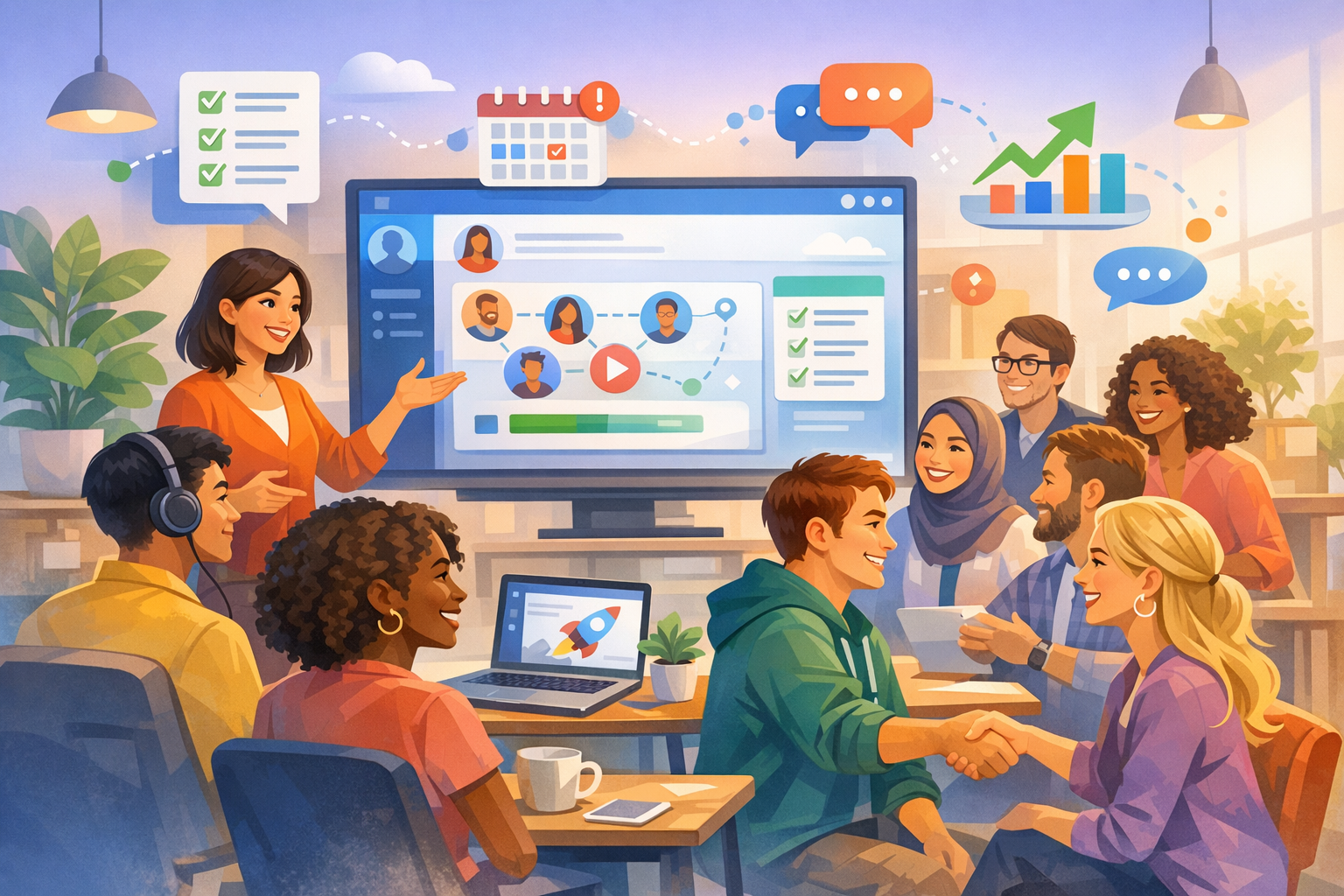
A strong community leadership pipeline reduces burnout and ensures continuity when moderators or managers move on. The worst time to find new leaders is when existing ones have already left. A healthy community continuously identifies and develops potential leaders from within its membership.
Start by watching for members who demonstrate consistent engagement, good judgment in conversations, and a genuine investment in the community’s wellbeing. These people often emerge naturally — they’re the ones answering questions before moderators can, de-escalating tensions, and welcoming newcomers.
Once identified, bring them into progressively larger responsibilities. This might look like:
- Stage 1: Inviting them to help with specific projects or events
- Stage 2: Giving them limited moderation or mentorship roles
- Stage 3: Including them in leadership discussions and community governance conversations
- Stage 4: Empowering them to make independent decisions in defined areas
This graduated approach serves two purposes: it tests whether someone is truly suited for leadership, and it gives them time to absorb the community’s culture and values organically.
Action step: Nominate one future moderator this week and give them a scoped trial role.
Create a Moderation Handover Playbook
Create a clear moderation handover so critical institutional knowledge and workflows don’t disappear. Documentation is the bridge between outgoing and incoming leaders. Without it, years of context walks out the door with every departure.
Your handover playbook should include:
Operational Essentials
Access credentials, platform admin procedures, recurring tasks and their cadences, vendor or tool contacts, and budget information where relevant.
Cultural Context
The community’s origin story, core values, unwritten norms, and the reasoning behind key policies. New leaders need to understand not just what the rules are, but why they exist. This cultural layer is essential to community governance.
Relationship Maps
Who are the key members, frequent contributors, and potential trouble spots? What partnerships or external relationships does the community maintain?
Decision Frameworks
How have past leaders handled grey-area situations? Document precedents for common moderation dilemmas, conflict scenarios, and policy questions.
What’s Been Tried
Include a record of past experiments, what worked, what failed, and why. This prevents new leaders from repeating mistakes or abandoning successful approaches unknowingly.
Keep this playbook as a living document, updated quarterly rather than frantically assembled during someone’s final week.
Protect Institutional Knowledge for Community Continuity
Protect institutional knowledge so your community’s culture and governance survive staff changes. Communities accumulate wisdom over years — inside jokes that bond members together, historical context that informs current dynamics, lessons learned from past crises. This institutional memory is fragile, and without deliberate preservation, community continuity suffers.
Protect it by:
- Maintaining accessible archives of important decisions and their rationale
- Recording periodic “state of the community” reflections
- Encouraging overlapping tenures so incoming leaders learn directly from outgoing ones
- Creating shared spaces where leadership knowledge lives independent of any single person
The goal is ensuring that no single individual becomes a single point of failure for the community’s collective knowledge.
Communicate Leadership Transitions Transparently
When leadership changes happen, communicate openly with your community. Members notice when familiar faces disappear, and silence breeds anxiety and speculation. Announce transitions, introduce new leaders warmly, and give your community space to ask questions.
Transparent transitions also reinforce trust — they signal that the community is bigger than any one person and that its continuity has been thoughtfully considered. This transparency is a hallmark of mature community governance.
Start Your Community Succession Plan Today
If you’re currently building or managing an online community, the time to think about succession planning is now — not when burnout hits or life circumstances force a sudden departure.
Even simple steps make a difference:
Action step: Document one recurring task today — then share it in your leadership workspace.
- Identify one potential future leader this week.
- Start a shared leadership knowledge base this month.
For foundations, onboarding, and governance templates, see Community Launcher — it helps you establish solid structure from day one, making eventual transitions smoother by building community continuity into your operations from the start.
The Bottom Line: Future-Proof Your Online Community
Succession planning isn’t pessimistic — it’s an act of love for your community. It says: “This space matters beyond my involvement, and I want it to thrive long after my chapter ends.”
The communities that endure across years and decades aren’t necessarily the ones with the most charismatic founders. They’re the ones that built systems, developed people, and documented wisdom along the way. Start building your online community succession plan today.
Frequently Asked Questions
What is succession planning for online communities?
It’s a documented process to develop future leaders, transfer moderation knowledge, and maintain community continuity when key people move on.
How do I create a handover playbook?
List access credentials, workflows, policies, decision criteria, relationship maps, and “what’s been tried,” then keep it updated quarterly.
How do I identify future community leaders?
Look for consistent helpers who de-escalate conflicts, welcome newcomers, and model your values. Start them with scoped responsibilities and gradually increase their role.
What tools support community succession planning?
Use a shared doc hub, a task calendar, and a role matrix. Platforms like Community Launcher provide community governance templates and structure to support leadership pipelines from day one.






Leave a Reply