
A step-by-step playbook for community owners to identify, vet, and enable external partners with clear tiers, benefits, agreements, and co-marketing workflows that scale globally.
Every thriving community eventually reaches a growth inflection point where internal efforts alone can’t sustain momentum. That’s where a structured Community Partner Program comes in — a systematic framework for collaborating with external organizations, creators, and educators who share your mission and amplify your reach.
Whether you’re running a professional network, a learning community, or a creator collective, building a partner program transforms one-off collaborations into a repeatable growth engine. It streamlines partner onboarding, codifies your referral program, and gives every collaborator a clear path to deeper engagement.
Here’s how to do it right — and if you want to move fast, download the Community Partner Program templates and scorecard at Community Launcher to start building today.
Step 1: Define Partner Criteria and Fit Scorecard
Before you recruit anyone, get crystal clear on who qualifies as a partner. Not every organization or creator is the right fit. Define criteria across three dimensions:
Alignment: Does the potential partner share your community’s values, audience profile, and mission? A misaligned partnership creates confusion for your members and dilutes your brand guidelines.
Reach & Credibility: Do they have an established audience, proven expertise, or institutional credibility that adds value to your community? Look for partners who already engage the people you want to reach.
Capacity: Can they actually deliver? A partner who commits but can’t execute damages your brand more than having no partner at all. Assess their team size, content output, and operational maturity.
Document these criteria in a simple scorecard. Rate prospective partners on a 1–5 scale across each dimension. Set a minimum threshold — for example, a combined score of 10 out of 15 — before moving forward with any partnership conversation.
Step 2: Design Partner Tiers (Affiliate, Content, Strategic)
A one-size-fits-all approach doesn’t work. Structure your program into tiers that match different levels of commitment and capability:
Tier 1 — Affiliate Partners: These are individuals or organizations who promote your community in exchange for referral benefits. Low commitment, low complexity. Think of this as your referral program layer — partners share links, track conversions through dashboards, and earn rewards based on sign-ups.
Tier 2 — Content Partners: These partners co-create value — guest workshops, co-authored resources, joint challenges, or podcast collaborations. They invest time and creative energy into your community and expect meaningful exposure in return.
Tier 3 — Strategic Partners: These are deep integrations — co-branded programs, revenue-sharing arrangements, embedded community experiences, or joint go-to-market campaigns. High commitment, high reward, and typically involving executive-level relationships.
Each tier should have clearly documented expectations, deliverables, and review cycles. Partners should be able to graduate between tiers as the relationship matures and results compound.
Step 3: Map Partner Benefits by Tier
Partners need compelling reasons to participate. Design benefits that escalate with commitment:
- Affiliate Partners get brand exposure, a referral tracking dashboard, community access, and periodic recognition in your channels.
- Content Partners receive co-marketing support, audience access, featured placement in newsletters and event calendars, and analytics on their contributions’ performance.
- Strategic Partners unlock revenue sharing, joint go-to-market campaigns, executive introductions, priority co-branding opportunities, and custom reporting on KPIs tied to the partnership.
The key principle: benefits should feel disproportionately generous relative to what you’re asking. Great partner programs feel like a privilege, not an obligation. When partners see clear ROI at every tier, retention and performance both rise.
Step 4: Create Simple Partner Agreements
Don’t over-engineer legal frameworks, but don’t skip them either. Each tier needs a lightweight partnership agreement covering:
- Scope of collaboration and specific deliverables
- Brand usage and brand guidelines
- Duration and renewal terms
- Termination clauses and off-boarding process
- Revenue or referral terms (if applicable)
- Data sharing and privacy considerations
Keep agreements to 1–2 pages. The goal is clarity and mutual protection, not bureaucracy. A clean agreement accelerates partner onboarding and sets the tone for a professional, trust-based relationship.
Step 5: Build a Co-Marketing Playbook (Assets, Calendars, KPIs)
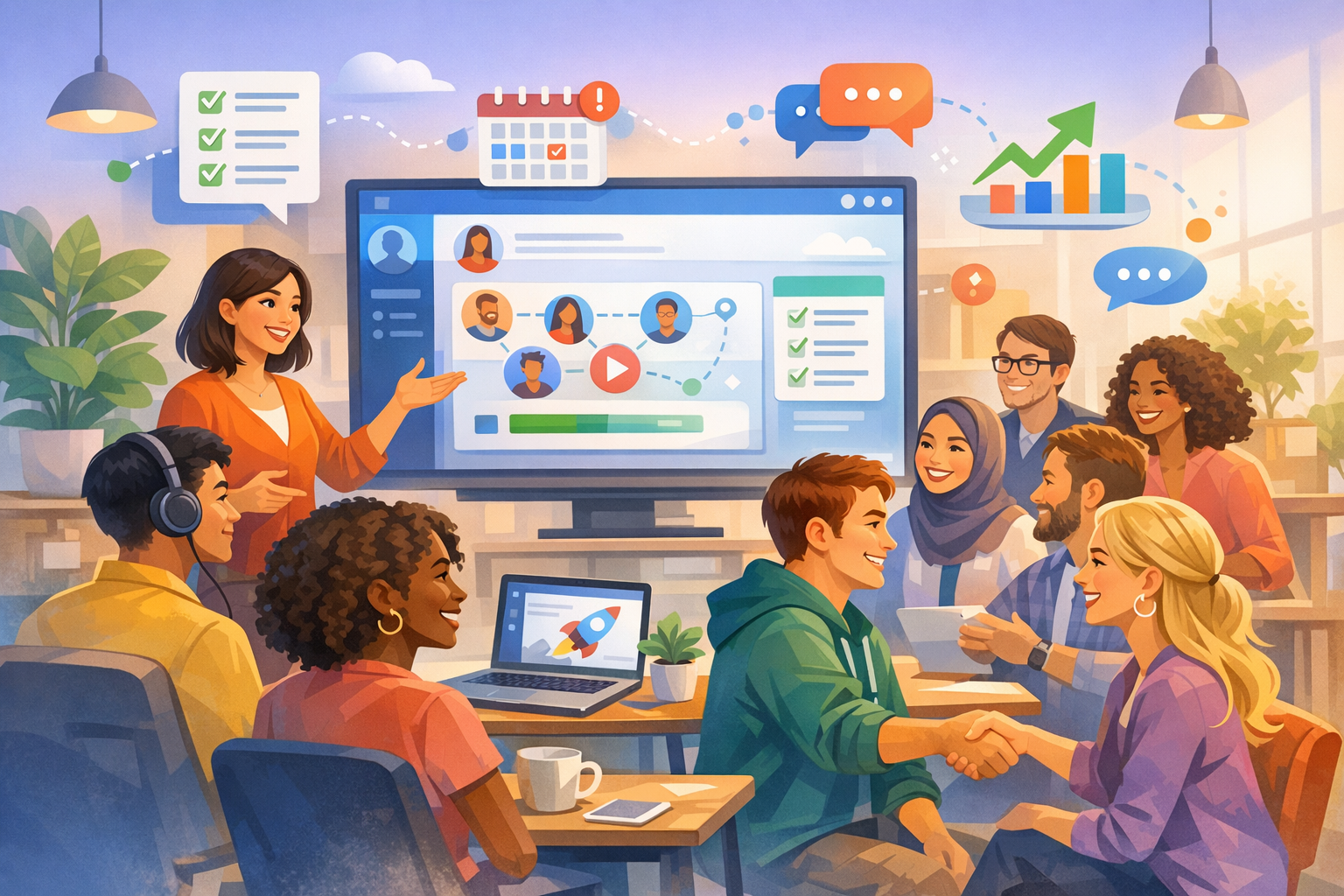
This is where most partner programs fail — not in recruitment, but in activation. Build a repeatable co-marketing playbook that includes:
Asset Templates: Provide partners with pre-built social graphics, email copy, landing page templates, and talking points they can customize. The easier you make it for partners to promote you, the more they will. Get co-marketing asset templates and a KPI dashboard guide from Community Launcher.
Campaign Calendars: Align on quarterly co-marketing moments — joint webinars, challenges, launches, co-branded campaigns, or awareness weeks. Shared calendars eliminate scheduling friction and create natural momentum.
Shared KPIs and Metrics: Agree on what success looks like upfront. Track referral sign-ups, content engagement, event attendance, conversion rates, and partner-sourced revenue. Use dashboards that both parties can access in real time.
Communication Cadence: Set a regular check-in rhythm — monthly for Content Partners, bi-weekly for Strategic Partners. Use a shared channel (Slack, Discord, or a dedicated partner space within your community platform) to keep communication flowing between formal meetings.
Step 6: Scale Globally with Localization
As your community grows internationally, empower regional partners to localize your program. Provide translation support, culturally adapted assets, and flexible event timing across time zones. Your best global partners are often local community leaders who understand nuances you never could from headquarters.
Localization isn’t just about language — it’s about adapting your co-branded campaigns, examples, and community rituals to resonate locally. Give regional partners autonomy within your brand guidelines, and treat them as extensions of your team rather than distant affiliates.
Frequently Asked Questions
What is a community partner program?
It’s a structured framework for collaborating with external organizations and creators to co-create value, expand reach, and drive member growth through clearly defined tiers, benefits, and co-marketing workflows.
How do you vet potential partners?
Use a scorecard rating alignment, reach/credibility, and capacity on a 1–5 scale each. Set a minimum combined threshold and advance only those who meet it. This keeps quality high and protects your community’s trust.
What goes in a partner agreement?
Scope, deliverables, brand usage guidelines, duration/renewal terms, termination clauses, and revenue/referral terms — all kept to 1–2 pages for clarity and speed.
How do you measure partner program success?
Track referral sign-ups, event attendance, content engagement, conversion rates, partner-sourced revenue, and partner satisfaction scores. Review KPIs quarterly and adjust tiers or benefits based on performance data.
Start Building Your Community Partner Program Today
A well-designed partner program doesn’t just grow your community — it creates a network effect where every partner’s audience becomes a potential pathway to your ecosystem. It compounds over time as partners graduate between tiers, co-marketing campaigns build momentum, and your brand reaches audiences you’d never access alone.
Ready to launch or scale your Community Partner Program? Grab templates, scorecards, and playbooks at Community Launcher. It’s purpose-built to help community owners move from idea to sustainable, scalable growth — with the frameworks and tools to build programs like this from day one.
The best communities aren’t built alone. They’re built through intentional, structured partnerships that multiply impact far beyond what any single team can achieve.





Leave a Reply